
People walk up to the Common Tides trailer and something catches them off guard. They look around for a second, trying to figure out what is different. Then it hits them. There is no generator running.
At most food trucks and coffee trailers, a generator is just part of the deal. It is loud, it smells like exhaust, and it runs the whole time you are there. That is what people expect. At Common Tides, the only sounds are the grinder going and the steam wand working. That is it. And honestly, that reaction from customers is one of my favorite parts of showing up to an event.
Sustainability was not something I bolted onto Common Tides as a marketing angle. It was built into the plan from the beginning, right alongside the decision to serve genuine specialty coffee. This is my community. These are the roads I drive, the markets I set up at, the coast I live near. You take care of what you are part of.
Here is an honest look at what that actually means in practice, how we got here, and where we are going.
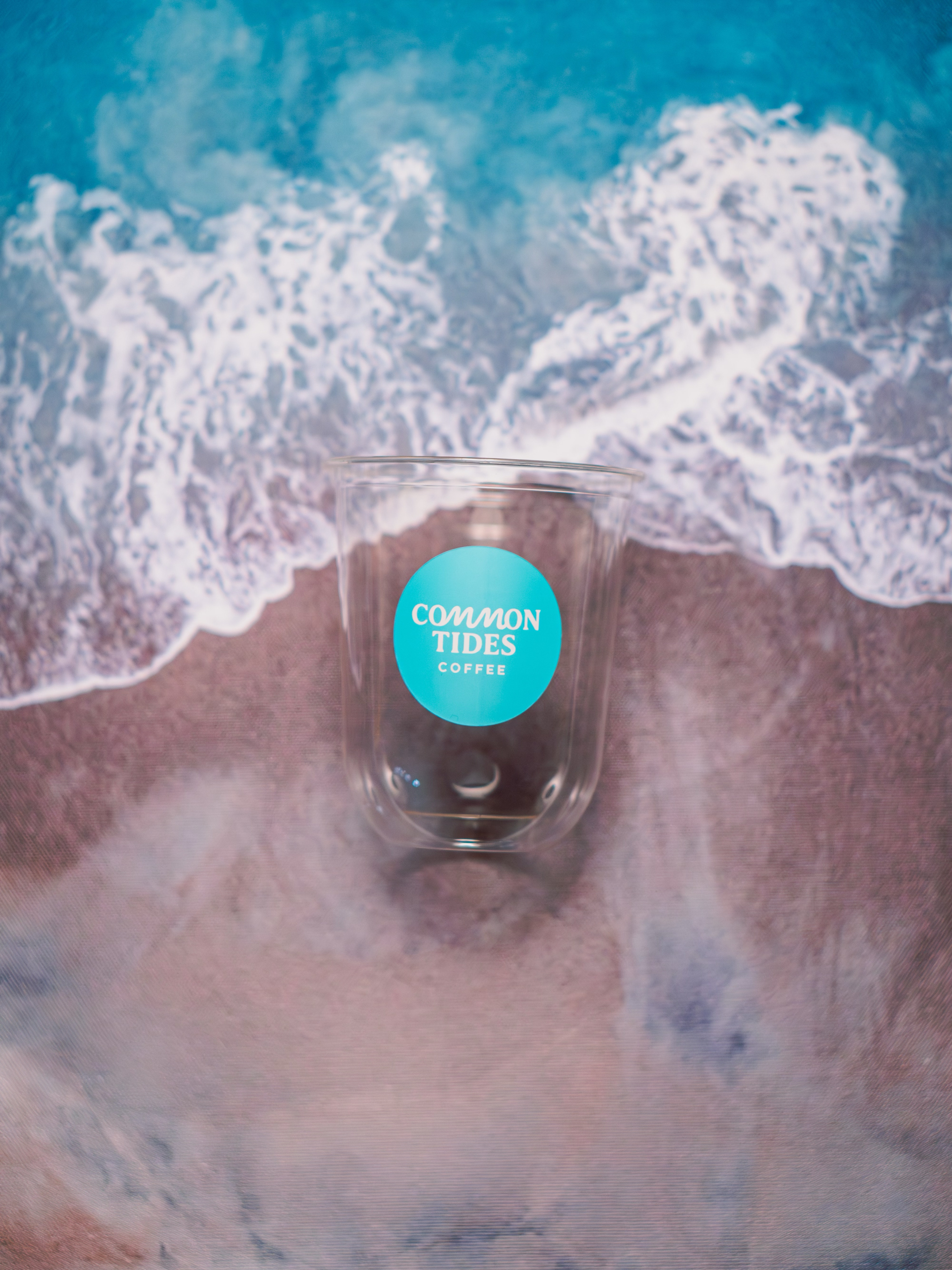
Every cup at Common Tides is fully compostable. Part of our partnership with Wilmington Compost Company.
How the Cup Situation Evolved
When I launched Common Tides, I made sure the cold cups were compostable from day one. That part felt straightforward. What I was not fully satisfied with were the hot cups. The supplier I started with offered cups made from recycled material, which is better than nothing, but recycled is not the same as compostable. Those cups could not be diverted from the landfill the way I wanted.
The upgrade happened because of a relationship, not a product search. After I started composting through Wilmington Compost Company, I got a chance to visit their farm out in Rocky Point. I met Trey there, and in that conversation I found out they supply compostable cups directly to businesses. Specifically Eco Products hot cups and lids.
That was the piece I had been looking for. I switched the hot cups over immediately.
Now every cup that leaves the Common Tides trailer, hot or cold, is fully compostable. The straws are compostable too. And the cups do not just get thrown away at the end of the day. They go back to Wilmington Compost Company and get processed properly.
That full loop matters to me. Compostable cups are only meaningful if they actually get composted. Sending them to the landfill in a compostable cup is still sending them to the landfill. The partnership with Wilmington Compost Company closes that loop.
Working with Wilmington Compost Company
I first heard about Wilmington Compost Company through a recommendation. Once I started telling people that the cups were compostable, someone pointed out that I should have a real composting system in place to match. That was the right call.
The way it works is simple. I keep a compost bucket at the trailer. When it fills up with coffee grounds, compostable cups, and organic waste from a shift, I hold it until I have a solid amount built up. Then I drive it out to their location in Rocky Point and drop it off.
I have gotten to know Riley, Trey, and Mary over time. They are good people doing something genuinely useful for this area. Running a composting operation is not glamorous work, but it makes a real difference in what actually ends up in landfills versus what gets turned back into something useful. I am glad they exist and I am glad to support what they are building.
Wilmington Compost Company
Based in Rocky Point, NC. Common Tides composts coffee grounds and compostable cups through their program and sources Eco Products compostable hot cups and lids directly from them. Run by Riley, Trey, and Mary.
The Battery Setup and What It Actually Powers
I want to be specific here because I think people assume that running a coffee trailer on battery means some limited, stripped-down setup. That is not the case.
The Common Tides trailer runs entirely on a home battery backup system. No gas generator anywhere on the rig. Here is everything that battery is powering during a four-hour shift:
Espresso machine at 220 volts
Commercial espresso grinder
Refrigerator
Water pumps
All lighting
All outlets and accessories
The espresso machine drawing 220 volts is the detail that surprises people the most. That is not a small load. Running a commercial espresso machine on battery for a full shift, pulling shot after shot, is something a lot of people assume is not practical. It works. A full charge gets me through a four-hour event without any issue.
And customers notice. Not in a dramatic way, but you can see it when they walk up. They pick up on the silence. A few have asked directly how the trailer is powered. When I explain it, they genuinely appreciate it. It shows them that the quality of the coffee and the care for the environment are coming from the same place.
Solar Is the Next Step, Not the Current One
Battery power was the right first step. The next step is making the whole system off-grid.
I want to be clear about where this stands, because I would rather under-promise. Solar panels are planned for the roof of the trailer, and they are not installed yet. Right now the battery charges from the grid between shifts. When the panels go on, they will feed directly into the battery system so it stays charged from the sun instead. That is the point where every shift runs entirely on renewable energy. No grid power, no gas, nothing burning anywhere in the process.
"The goal is simple. Pull a great espresso and leave no trace. Once the panels are on, the sun will be doing the work."
That is the vision for Common Tides from an energy standpoint. A solar-charged battery powering a commercial espresso machine, a grinder, a refrigerator, and every light in the trailer. Completely off the grid at every event.
Buying Local and Building Community
Sustainability at Common Tides is not just about what goes in the trash or how the trailer gets power. It is also about where the money goes when I buy supplies.
Right now I source my coffee from a local roaster right here in Wilmington NC. I am not going to name them here yet because I want to give that relationship more space to develop before I make it a public talking point. But buying locally roasted beans was a deliberate choice. Supporting a local roaster means the money stays in this community, and it means I have a real relationship with the people behind the coffee I serve.
Wilmington Compost Company is the same idea. I could order compostable cups from any national supplier and have them shipped to my door. Instead I buy them from a local business I have visited in person, whose team I know by name. That is the kind of supply chain I want Common Tides to be built on.
As the trailer grows, I want to keep adding local partnerships wherever it makes sense. Local honey, local syrups, local ingredients where the quality is there. The goal is for Common Tides to be genuinely woven into the local economy, not just passing through it.
Common Tides was also recently certified as a 5-Star Ocean Friendly Establishment by Plastic Ocean Project, a Wilmington-based nonprofit. Five stars is the highest rating in the program. You can read the full story on our OFE certification post.
What Customers Actually Say
Wilmington people get it. That is the honest truth. When customers find out the cups are compostable, they are happy about it. When they find out the trailer is battery-powered, they are impressed. But what I hear most is that they appreciate that the coffee is genuinely good AND the operation is genuinely responsible. To a lot of people, those two things together feel rare.
You can get a decent coffee from a big chain or a craft coffee shop with a sustainability pledge buried on their website. That is different from a local operator who made specific choices about their equipment, their cups, their composting, and their suppliers before they ever pulled their first shot in public.
Common Tides has a lot of five-star reviews on Google. I am proud of every one of them. But the ones that mention the vibe of the trailer, the care that goes into it, the quiet and the cleanliness of the setup -- those mean the most. Because that is the whole point. Great coffee and a business that gives a damn about where it is operating. Those should not be separate things.