
Last week Feast Wilmington published a story about Common Tides. The headline is "The Campsite Rule, One Cup at a Time," and I could not have picked a better one. Katie Schmidt wrote it, Sarah Johnston Creative shot it, and it ran in their Feast Unwrapped section on October 9.
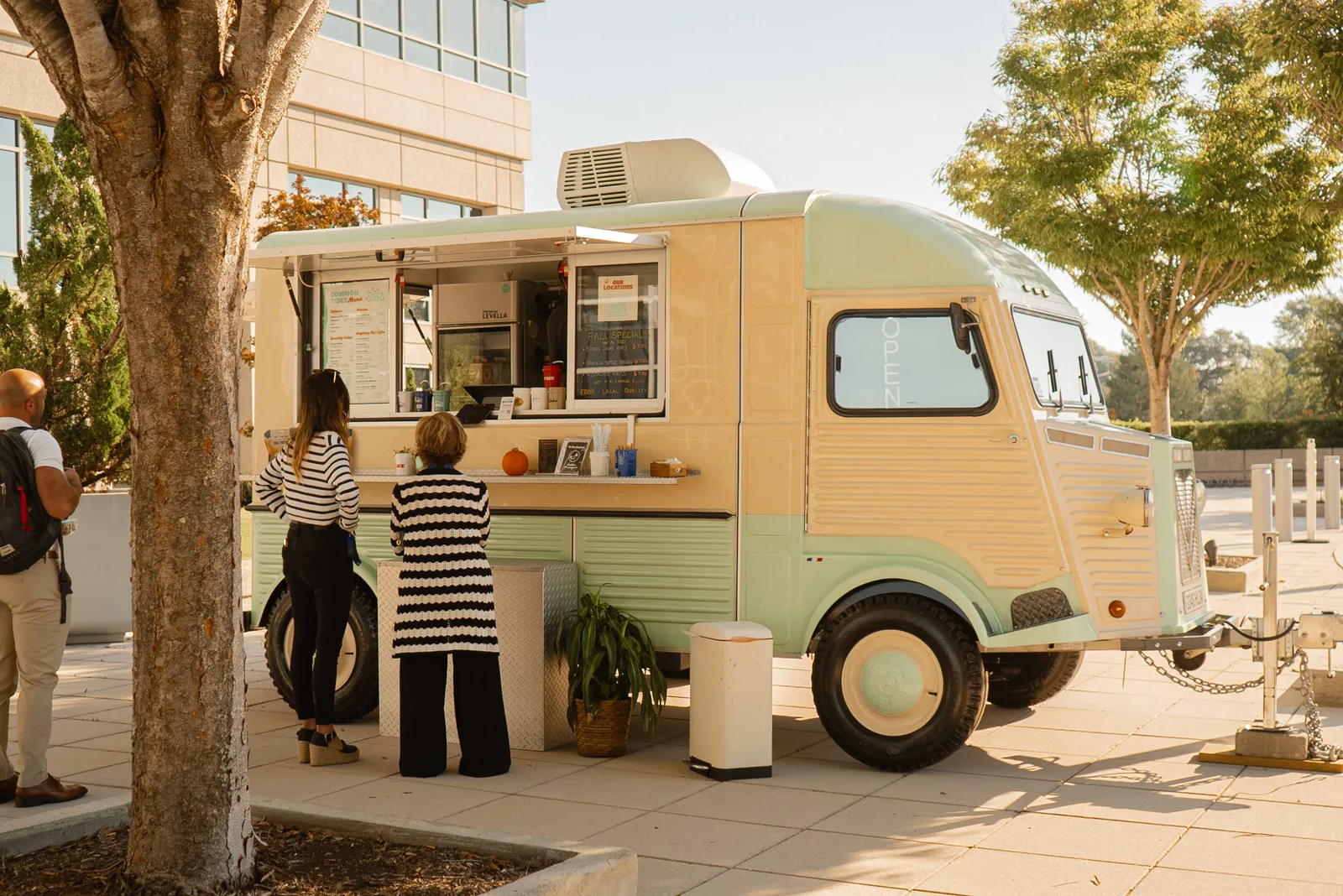
The trailer at Skyline Center, where Feast caught up with us. Photo: Sarah Johnston Creative for Feast Wilmington.
Feast is the publication that covers food and drink in Wilmington the way it deserves to be covered, so having the trailer in there next to the restaurants and chefs I look up to means a lot. If you want the full piece, go read it first. This post is the behind-the-scenes version: what the campsite rule actually is, the parts of the story I want to underline, and a few things that did not fit in a magazine column.
Read the article: The Campsite Rule, One Cup at a Time by Katie Schmidt, photography by Sarah Johnston Creative. Feast Wilmington, October 9, 2026.
What the Campsite Rule Means
If you were ever a Scout you already know it. Leave the campsite better than you found it. At the end of a trip everyone fans out and picks up whatever is on the ground, including the stuff that was there before you arrived, so the next group gets a cleaner site than you did.
I am an Eagle Scout, and that rule stuck harder than any knot I learned. When I started planning Common Tides I did not sit down and write a sustainability policy. I just asked, at every decision, whether the choice left things better or worse. Cups, power, water, where the grounds go, who I buy from. The trailer is what you get when you answer that question honestly enough times in a row.
"Not only is the coast something we need to preserve, I think there's value in doing right by the community."From the Feast Wilmington article
The Parts I Want to Underline
Katie got the whole arc of the business into a few hundred words, which is harder than it sounds. A few moments from the story that I think matter most:
Why a trailer and not a shop
I used to work out of coffee shops all over Wilmington, and every one had something that made it special. I also watched good shops struggle because of where they were parked. So the question became: why not go to the people? A mobile espresso bar means the location problem goes away and I get to serve at farms, offices, schools and weddings instead of hoping the right neighborhood finds me.
The truck itself
The trailer was built in Argentina and was originally meant to be a charcuterie truck. It had never been used when I found it in Fayetteville and brought it home in November. The espresso machine came from Italy, and its delayed arrival pushed the opening date back. I would rather open late with the right equipment than on time with something that cannot pull a consistent shot, and I still feel that way every morning when the first espresso comes out exactly like the last one.
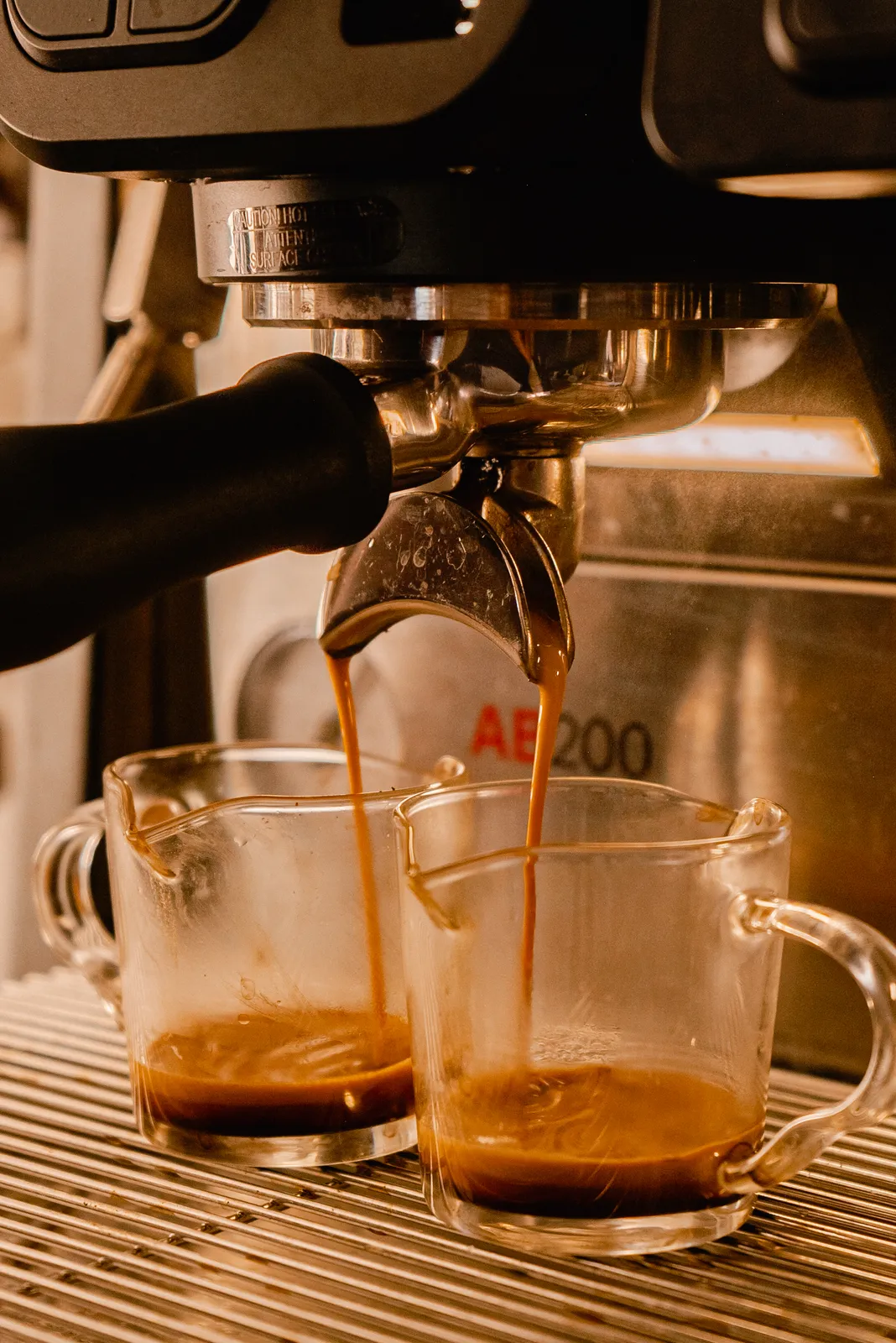
The machine from Italy that was worth waiting for. Photo: Sarah Johnston Creative for Feast Wilmington.
Quiet power
There is no generator. The trailer runs on battery power, which is why you can stand at the window and have an actual conversation. That was always the point. The thing I loved about coffee shops was connecting with the people in them, and I did not want a gas engine drowning that out. Solar is something I am working toward for a later phase; for now, batteries do the job.
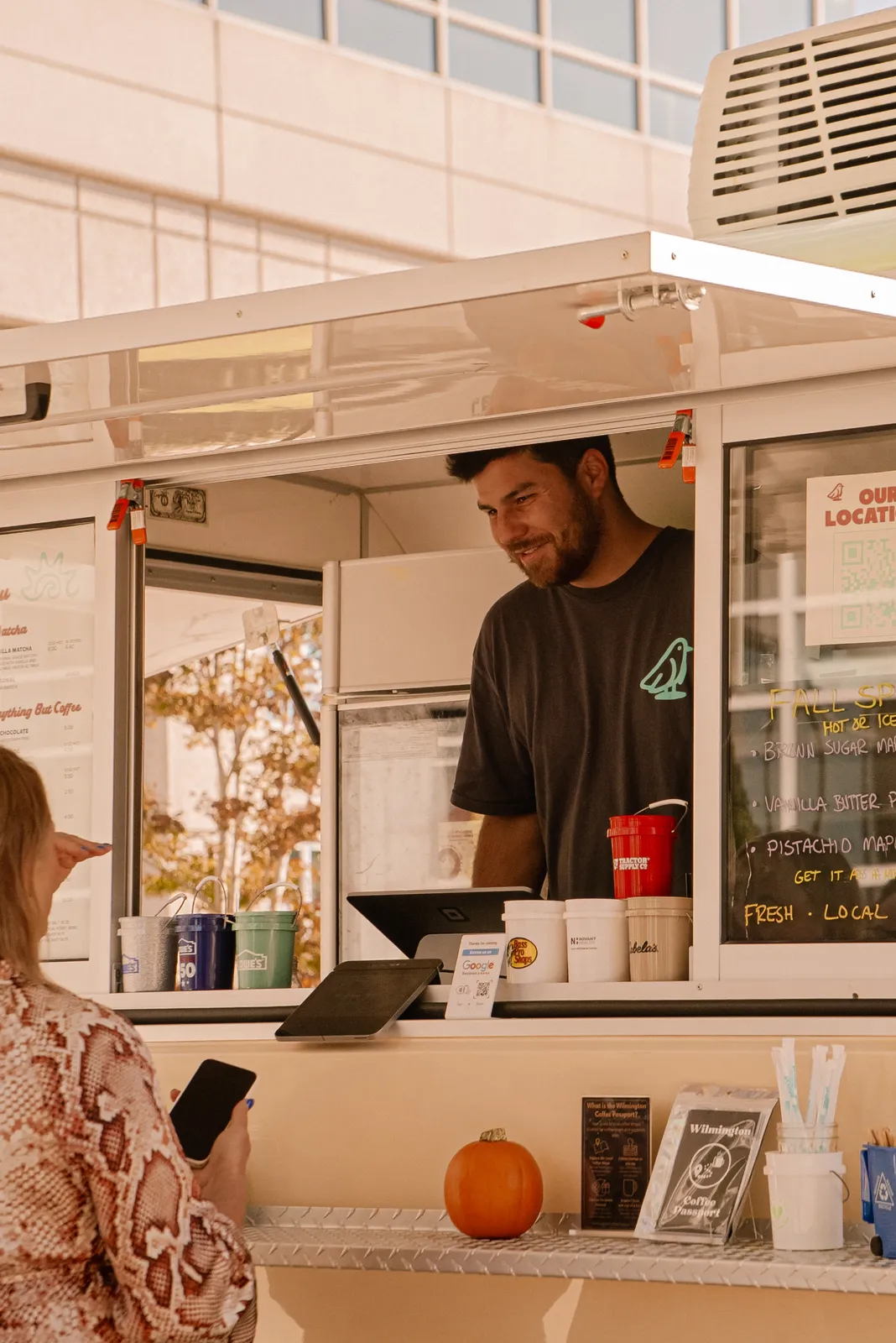
No generator noise, so the window is a conversation. Photo: Sarah Johnston Creative for Feast Wilmington.
Where everything comes from
This is the part I am proudest of, and Feast gave it real room:
- Coffee is roasted to order by a local Wilmington roaster. I pick it up twice a week so it is never sitting around.
- Water comes from Tidal Creek Co-op. A great cup of coffee starts with water, and most people never think about it.
- Sea salt for the salted caramel latte is from Sea Love Sea Salt, evaporated from Atlantic water a few miles from where I serve it.
- Honey is from Free Bees Apiary.
- Dog treats at the window are from Tails and Trails.
- Grounds and cups go to Wilmington Compost Company, which closes the loop. Every cup, lid, sleeve and carrier I hand out is compostable.
None of those are the cheapest option. All of them keep money in Wilmington and keep plastic out of the water. That trade has been worth it every single time.
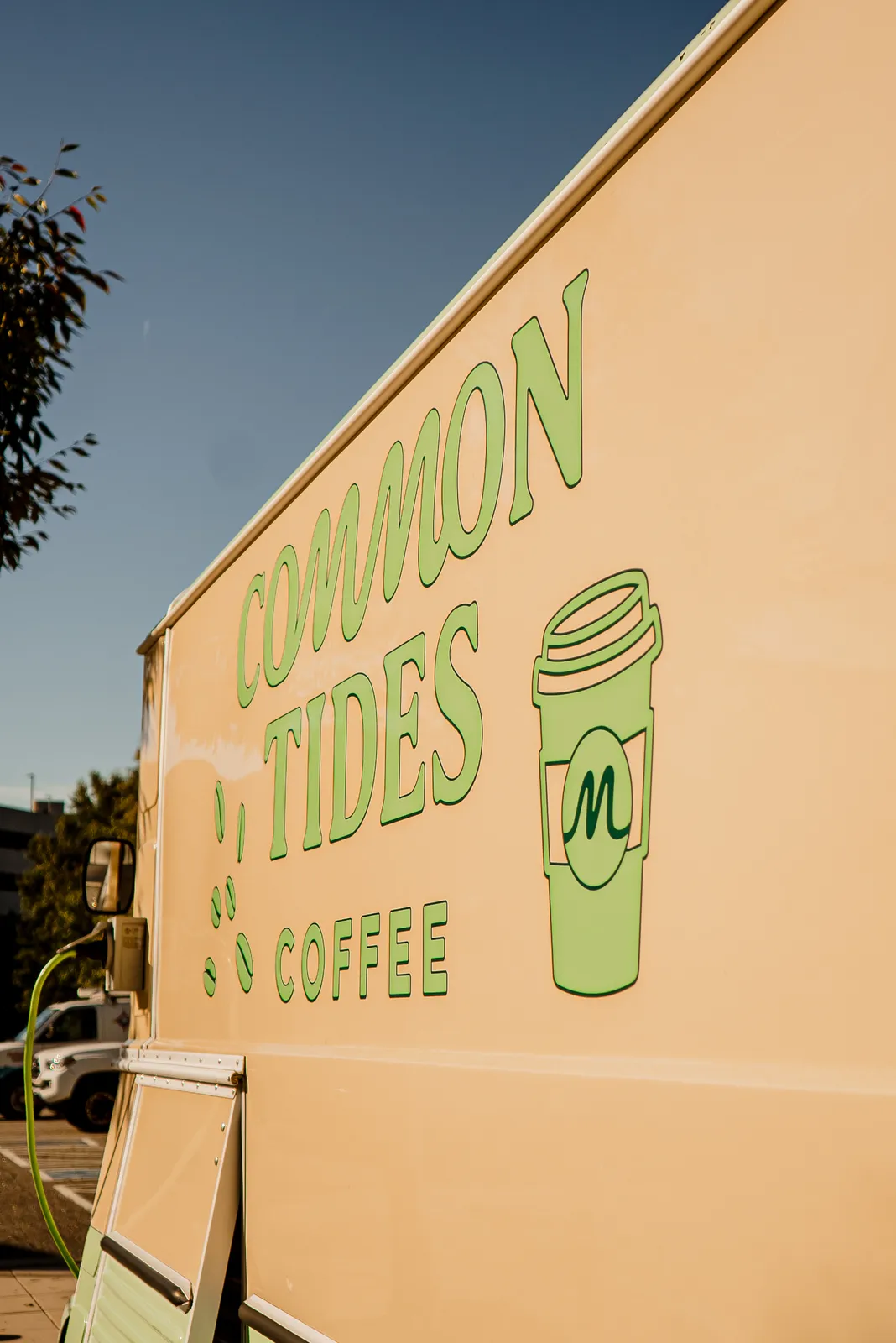
Photo: Sarah Johnston Creative for Feast Wilmington.
What Did Not Fit
A magazine piece has a word count, so a few things I would add:
The Ocean Friendly certification is a checklist, not a vibe. Feast mentions that Common Tides is a 5-Star Ocean Friendly Establishment through Plastic Ocean Project. That rating comes from specific practices they verify. I wrote about exactly what went into it here.
The people before the trailer. The article mentions Flying Machine Brewery, SOLA and Bald Head Island. Each of those jobs taught me something I use every day, from how a small operation keeps quality consistent to how much a community will show up for a business that shows up for it. Wilmington is a locally run town. I was surrounded by people who had started their own thing, and that is the only reason I believed I could.
Thank you. To Katie for the care she took with the story, to Sarah for the photos, and to Feast Wilmington for covering a coffee trailer with the same seriousness as a restaurant. And to everyone who has walked up to the window since February. You are the reason there is a story to tell.
Come Find the Trailer
The schedule changes every week. The live map at find.commontides.com shows every upcoming stop with directions and weather, and if you want the espresso bar at your own event, the booking form is below.